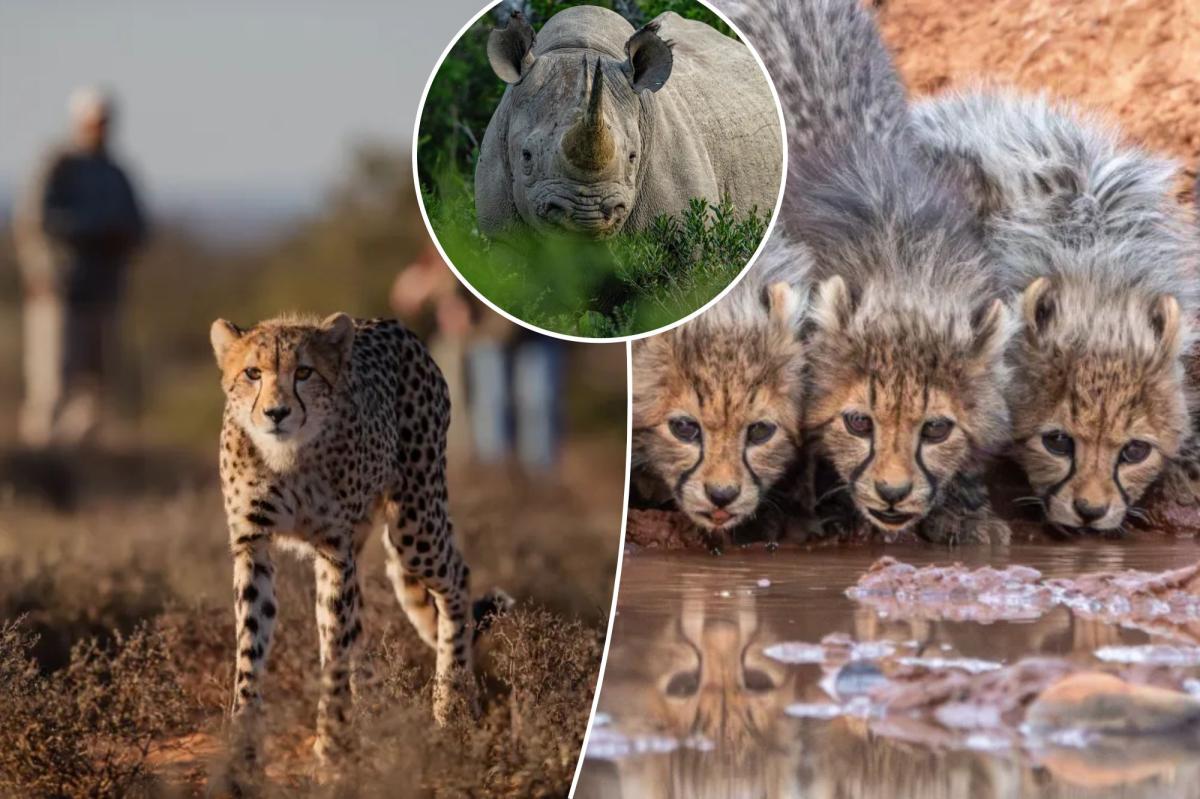
During a recent walk through Samara Karoo Reserve in South Africa’s Eastern Cape, I learned the recipe for the ultimate safari sundowner — and it wasn’t a G&T. It was golden light, blissful silence, and a wild cheetah lounging 20 feet away like she owned the place. (She did.)
Her name is Mbali, and despite her regal pose, she’s a busy mother. Her litter of six mischievous cubs was still hanging onto its last bits of baby fluff: silver-gray mullets meant to disguise them as fierce honey badgers. As the sun set, I crouched low to watch Mbali groom and nuzzle her little ones, amazed that the family remained so relaxed and confident around humans.
Such a rare privilege is possible thanks to Mbali’s great-grandmother, the legendary Sibella, and decades of careful, responsible habituation. Wild cheetahs — notoriously skittish animals — have been accustomed to people on foot at Samara since 2004, when Sibella was released on the reserve after being rescued and rehabilitated by the De Wildt Cheetah & Wildlife Trust following a brutal hunting attack.
Support authors and subscribe to content
This is premium stuff. Subscribe to read the entire article.