
Most have heard this time and time again from their mothers, aunts, or grandmothers — that you shouldn’t drink medicine on an empty stomach! This is true for certain medicines such as Aspirin, but it is not for Paracetamol? In a 1976 study, Gastroenterologists K.J Ivey and P. Setree concluded that while Aspirin did in fact have a negative effect on the stomach, Paracetamol did not. Paracetamol acts this way because unlike other painkillers that may irritate the stomach, Paracetamol is absorbed rapidly by our bodies and it generally doesn’t cause stomach problems.
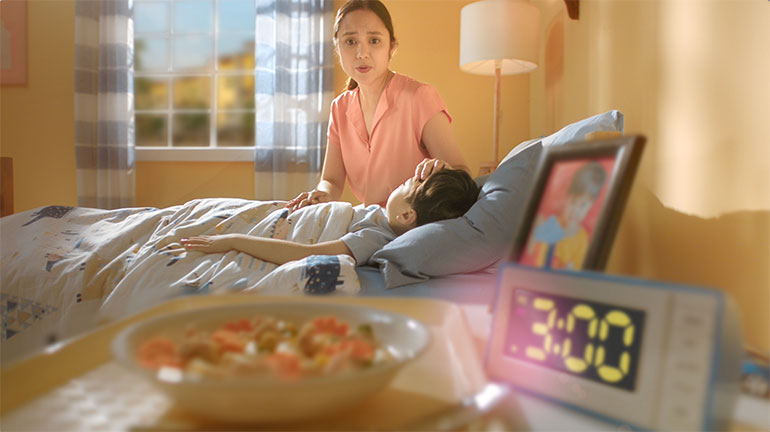
This important difference explains why Paracetamol is well tolerated and often recommended for children. It’s gentle enough to be taken even without food in-take, making it a safe and effective option for fever relief even when your child has little or no appetite.
In addition, when taking Paracetamol, it is important that a parent or a caregiver should know the dosing and frequency of giving the drug. For dosing, most medication boxes have a guide for the dose to be given based on age or body weight of the child. Same goes for frequency — it’s recommended to take Paracetamol only every four to six hours. Other factors also include being aware of other medications that the child is currently taking, as some medications may also contain Paracetamol which can potentially result in overdosing if undetected. Understanding when and how much Paracetamol to give a child is also the key for effective pain and discomfort management.
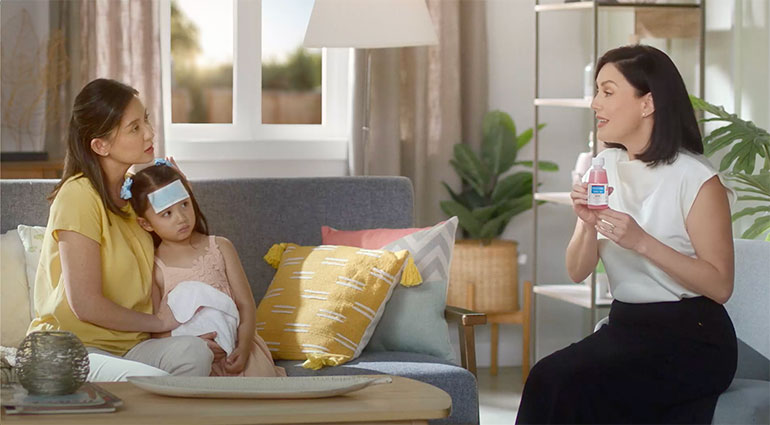
With these considerations in mind, it becomes clear why parents trust Paracetamol (Tempra) — a reliable fever-relief solution with its 100% dissolved Paracetamol No Shake Formula, for consistent dosing every time it is taken. It’s also Mabait sa Tummy, gentle enough that it can be taken even on an empty stomach, providing comfort and relief when children need it most.
Support authors and subscribe to content
This is premium stuff. Subscribe to read the entire article.